Amber (pronounced Amer) is situated about 11 kilometres from Jaipur and was the ancient citadel of the ruling Kachwahas of Amber, before the capital was shifted to the plains, the present day Jaipur.
It is the principal tourist attractions in the Jaipur area, located high on a hill. Amer Fort was built by Raja Man Singh I. Amer Fort is known for its artistic style of Hindu elements. With its large ramparts, series of gates and cobbled paths, the fort overlooks the Maota Lake, at its forefront
The Great Wall of Jaipur
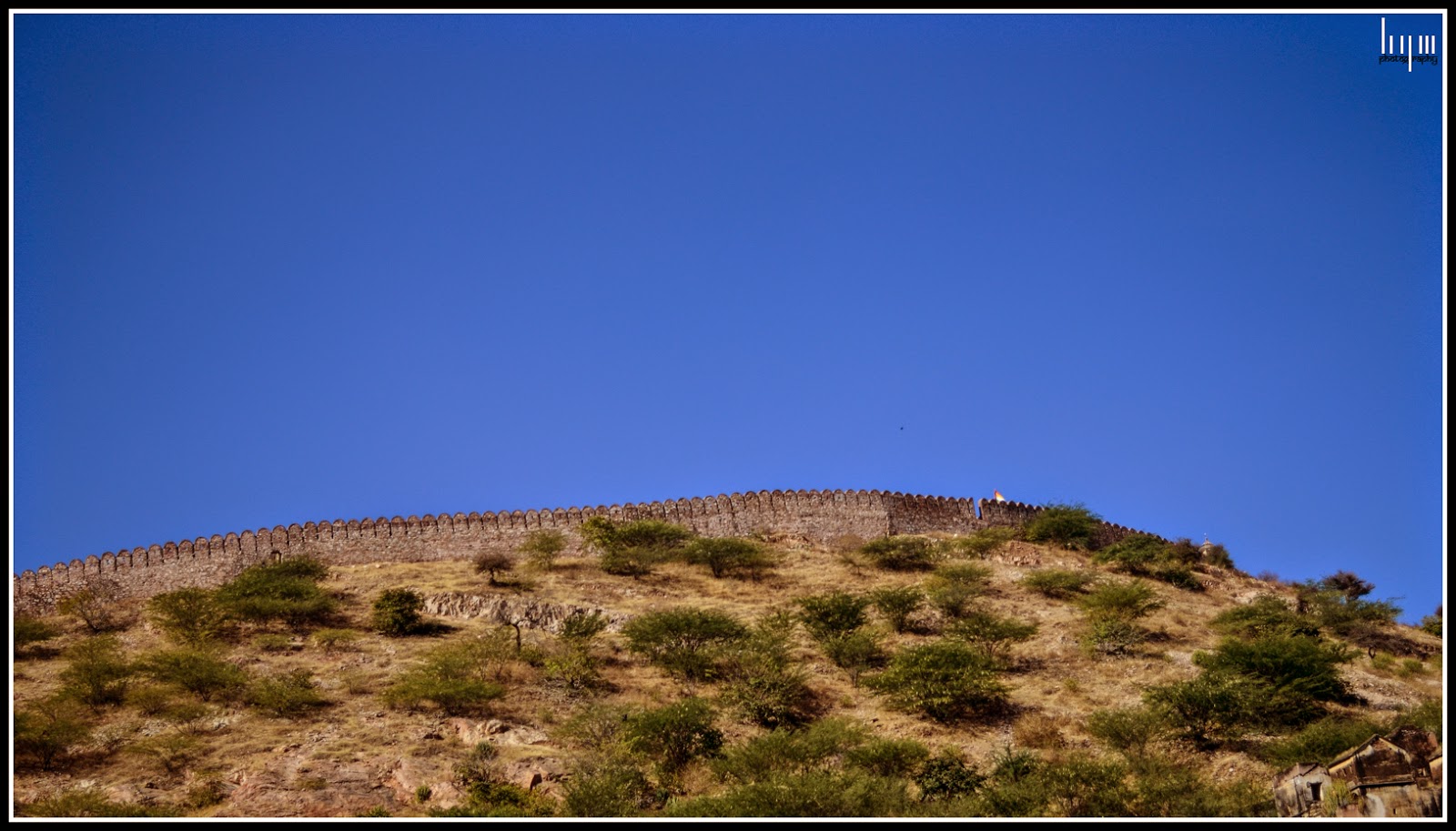
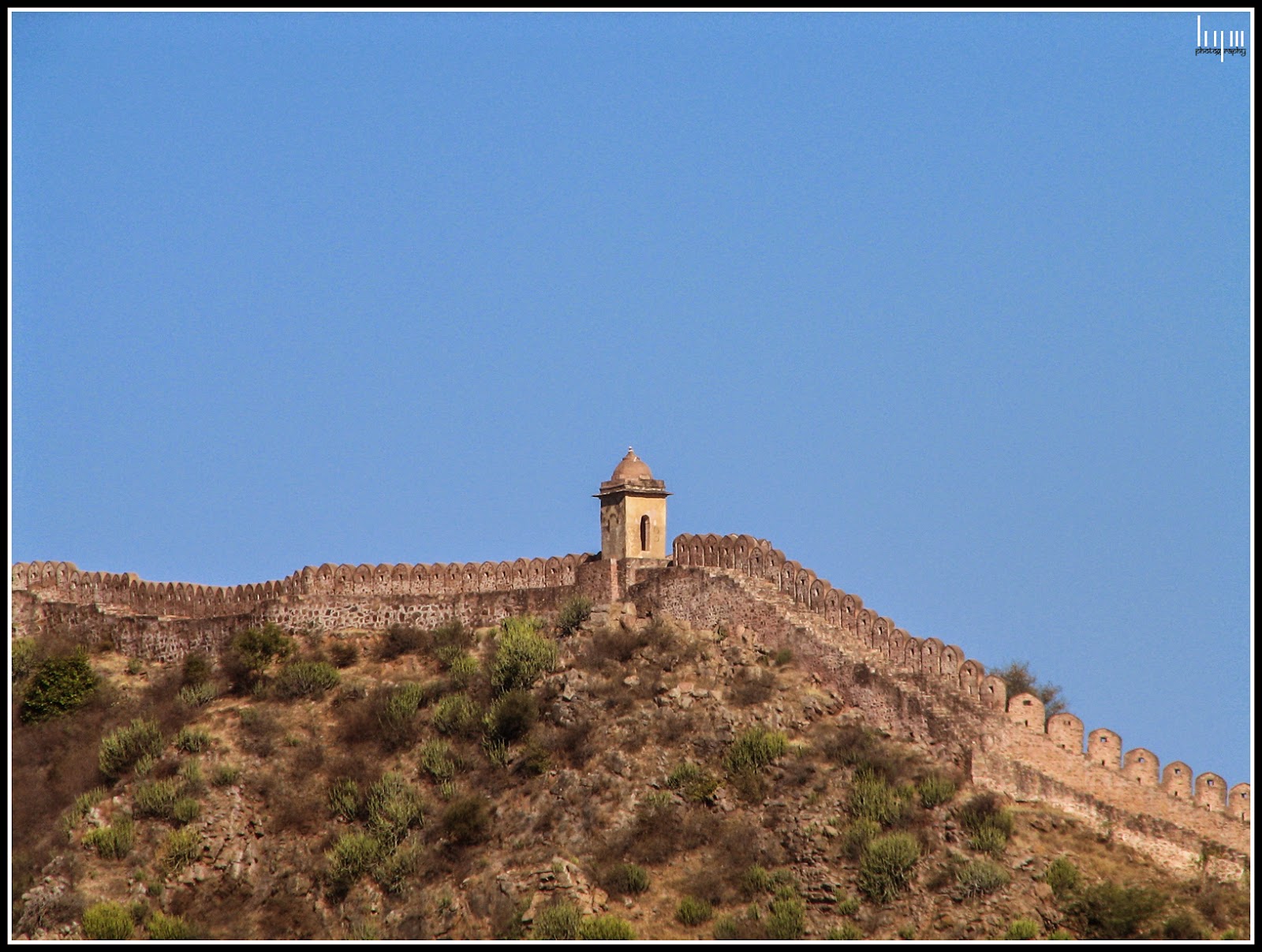
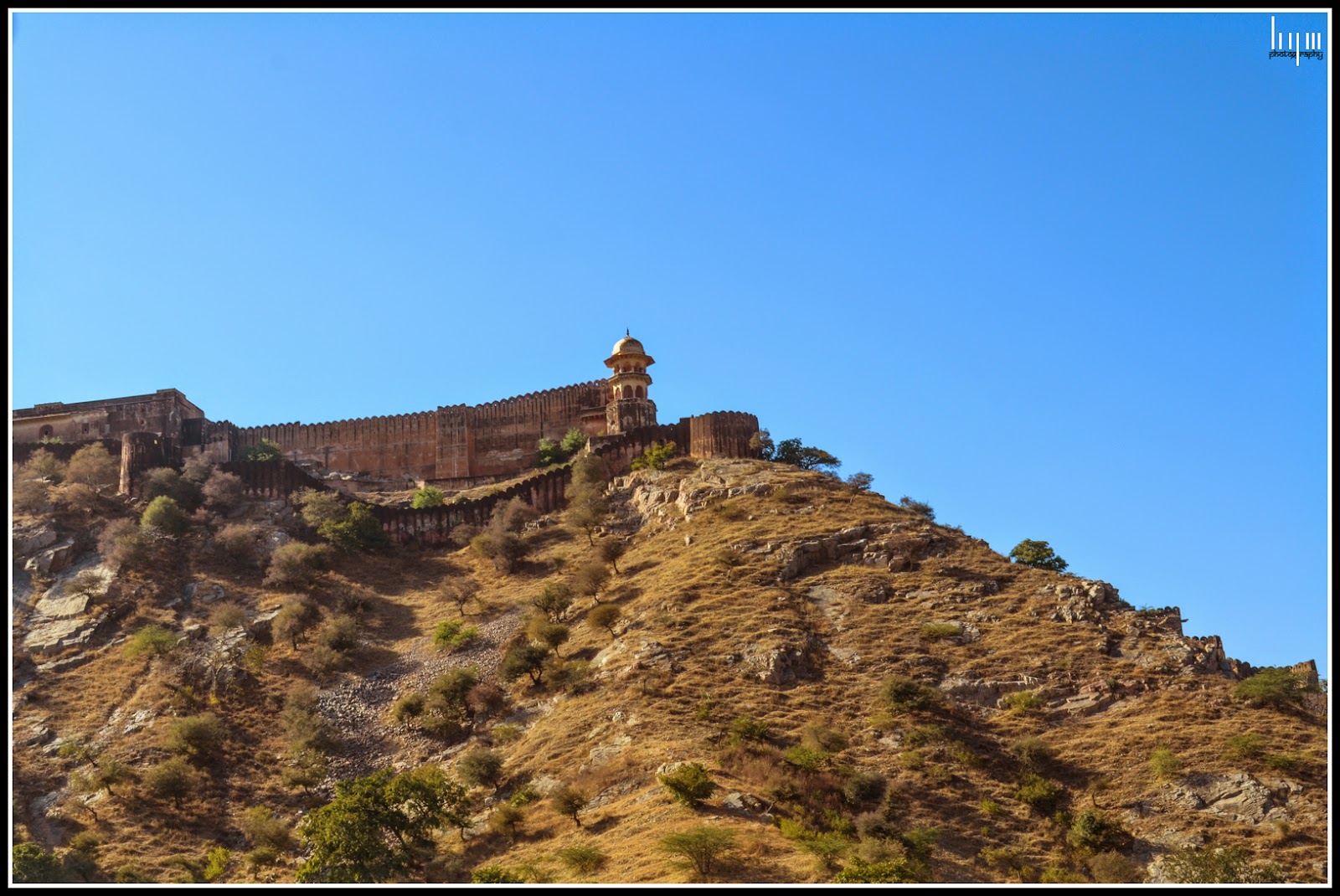
The fort wall around the Amer fort is also known as Great Wall of India. The wall is not a part of the Amer Fort, but Nahargarh Fort, close to Amer Fort. The wall extends over the surrounding hills, forming fortifications that connected this fort to Jaigarh, the fort above the old capital of Amer.
 |
| Jaigarh Fort |
 |
| City near the Wall |
 |
| Jaigarh Fort, as seen from the Amer fort |
Jaleb Chowk
This was the place where armies would hold victory parades with their war bounty on their return from battles, which were also witnessed by the Royal family women folk through the latticed windows.
There are two gates at both ends of the courtyard: Sooraj Pol (Sun Gate) and Chand Pol (Moon Gate).
 |
| The courtyard and the Sooraj Pol (main entrance to the palace) |
Sooraj Pol was built exclusively and was provided with guards as it was the main entry into the palace. It faced the eastern direction towards the rising Sun and hence the name. Royal cavalcades and dignitaries entered the palace through this gate.
Chand Pol was the entry gate for commoners.
 |
| Chand Pol, another entrance to the palace |
 |
| Panoramic view from Chand Pol |
 |
| The courtyard |
 |
| Panoramic view of the courtyard. Chand Pol on the left and Sooraj Pol on the right |
Ganesh Poll
Ganesh Pol or the Ganesh Gate, named after the Hindu god Lord Ganesh who removes all obstacles in life, is the entry into the private palaces of the Maharajas. It is a three level structure which has many frescoes and was also built at the orders of the Mirza Raja Jai Singh(1621–1627) and leads to the private quarters of the royal family. Above this gate is the Suhag Mandir where ladies of the royal family used to watch through the latticed windows functions held in the Diwan-i-Am.
 |
| Art Work on the Ganesh Pol |
 |
| Art Work on the walls of Ganesh Pol |
 |
| Art work on the ceiling of the Ganesh Pol |
 |
| Art work on the ceiling of the Ganesh Pol |
 |
| Garden in the Maota Lake. Entrance to this garden is blocked for visitors. |
 |
| Panoramic view of the garden and the surrounding hills |
Sheesh Mahal
The building to the left of the Ganesh Pol is called the Jai Mandir, which is exquisitely beautified with glass inlaid panels and multi-mirrored ceilings. The mirrors are of convex shape and designed with coloured foil and paint which would glitter bright under candle nights at the time it was in use. Also known as Sheesh Mahal (mirror palace), the mirror mosaics and coloured glasses were "glittering jewel box in flickering candle light". However, most of this work was allowed to deteriorate during the period 1970–80 but has since then been subjected to a process of restoration and renovation. Carved marble relief panels are placed on walls around the hall. The hall provides enchanting vistas of the Maota Lake.


A particular attraction here is the “magic flower” fresco carved in marble at the base of one of the pillars around the mirror palace which is identified by two hovering butterflies depiction; the flower has seven unique designs of fish tail, a lotus, a hooded cobra, an elephant trunk, a lion’s tail, a cob of corn and a scorpion, each is viewed by a particular way of partial hiding of the panel with hands.
 |
| The Magic Flower |
Latticed windows
 |
| View of the city and the lake |
 |
| View of the lake |
 |
| Art work on the ceiling |
Zenana
Zenana is the place where royal family women, including concubines or mistresses lived. This courtyard has many living rooms where the queens resided and who were visited by the king at his choice without being found out as to which queen he was visiting, as all the rooms open into a common corridor.
The queen mothers and the Raja’s consorts lived in this part of the palace in Zanani Deorhi, which also housed their female attendants. The queen mothers took deep interest in building temples in Amer town.